
525/425 Brain-inspired Computing – NEW Course
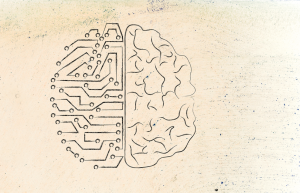
The course provides an overview of the fundamental concepts and current trends in neuro-mimetic and neuro-inspired Computing with a focus on designing neuromorphic networks for vision and movement.
Course Objectives:
1. To explore how computation in the human brain can be effectively modeled across different levels of abstraction (from a single neuron to neuronal networks and systems)
2. To introduce a computational formalization of brain function based on the model of neuron as a Spike Processing Machine – Spike Neural Networks (SNNs);
3. To employ neuro-mimetic or neuro-inspired SNNs and tackle a CS problem in a term-wide project.
To have access to the course material, please login to sakai.
525/443 Brain-inspired Computing – NEW Course
The course provides an overview of the fundamental concepts and current trends in neuro-mimetic and neuro-inspired Computing with a focus on designing neuromorphic networks for vision and movement.
Course Objectives:
1. To explore how computation in the human brain can be effectively modeled across different levels of abstraction (from a single neuron to neuronal networks and systems)
2. To introduce a computational formalization of brain function based on the model of neuron as a Spike Processing Machine – Spike Neural Networks (SNNs);
3. To employ neuro-mimetic or neuro-inspired SNNs and tackle a CS problem in a term-wide project.
To have access to the course material, please login to sakai.
525/443 Brain-inspired Computing – NEW Course
The course provides an overview of the fundamental concepts and current trends in neuro-mimetic and neuro-inspired Computing with a focus on designing neuromorphic networks for vision and movement.
Course Objectives:
1. To explore how computation in the human brain can be effectively modeled across different levels of abstraction (from a single neuron to neuronal networks and systems)
2. To introduce a computational formalization of brain function based on the model of neuron as a Spike Processing Machine – Spike Neural Networks (SNNs);
3. To employ neuro-mimetic or neuro-inspired SNNs and tackle a CS problem in a term-wide project.
To have access to the course material, please login to sakai.
107 Computing for Math and the Sciences
This course introduces the student to computers, programming, and some of the key ideas on which the field of computer science is based. The primary vehicle for doing so is the computer language MATLAB. The use of a program like MAPLE to manipulate symbolic equations is also covered.
Topics: Structure of Computers, MATLAB basics, Computation and decision-making, Iteration, Recursion, Applications, Efficiency Analysis. MAPLE, Program Proving
To have access to the course material, please login to sakai.
443/674 Integration of Computer and Brain Sciences
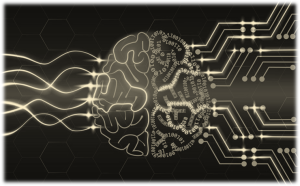
In this course, students have the opportunity to discover, and understand
1) how the human brain computes to achieve intelligent behavior and
2) how this knowledge guides the development of new computational algorithms that
- mimic the neural activity
- simulate a brain disease
- harness the learning ability of the brain (neuro-plasticity) and apply therapy
We cover the entire range of computational methods for modeling the brain activity from the micro (neural) to the macro (behavioral) level (without this coverage to be complete or dense).
Course syllabus.
To have access to the course material, please login to sakai.
443/674 Integration of Computer and Brain Sciences
In this course, students have the opportunity to discover, and understand
1) how the human brain computes to achieve intelligent behavior and
2) how this knowledge guides the development of new computational algorithms that
- mimic the neural activity
- simulate a brain disease
- harness the learning ability of the brain (neuro-plasticity) and apply therapy
We cover the entire range of computational methods for modeling the brain activity from the micro (neural) to the macro (behavioral) level (without this coverage to be complete or dense).
Course syllabus.
To have access to the course material, please login to sakai.